Thursday, 9 October 2014

International Day of the Girl-Are Women Human?

Saturday 11th October is International Day of the Girl. A day declared by the UN as a day when we celebrate girls, and raise awareness of issues of gender inequality all around the world. But why do we need a 'Day of the Girl', you may ask? We have 'International Women’s Day,' and, to quote ‘Friends’ character, Phoebe Buffay, ‘we can vote, we can drive, what more do they want?!’ Well the truth is that no country in the world has achieved gender equality. In Emma Watson’s inspiring address to the UN, she outlined the reasons she was a feminist. Reasons such as wanting to have control over her own body, not be sexualised by the media, or the fact that she deserves the same pay as her male counterparts for doing the same work. You may read that, and have heard her speech (if you haven’t, listen to it!), and thought, ‘yes well Emma Watson’s a celebrity, she’s in the limelight, she’s a minority, that’s just the nature of the business she’s in.

I say to that is simply not true! As a woman in the West, we are not paid the same as men, we are sexualised for our bodies and we are not treated with the same respect afforded to our male counterparts.

But let’s look into this issue a little deeper. There are, at present, about 3 million women and girls worldwide, termed as ‘sex slaves.’ (Nicholas Kristoff and Sheryl Wudunn, Half the Sky). 3 million. Sold to be raped. Often this persistent rape, up to forty times a day, leads to rotting of the internal organs, AIDS, and premature death. The practice of female genital cutting is also ransacking African countries today. The same source estimates that every ten seconds a girl is pinned down and her genital areas are cut, leaving open wounds and scars. Perhaps you have children, or would like to one day. It is worth considering that the equivalent to five jumbo jets worth of women die in labour each day. Take that in. Five jumbo jets worth PER DAY. That’s one maternal death every minute. I could go on and on: the fact that a female foetus in more likely to be aborted than a male one, or that girls are often not afforded an education simply because of their sex, or that 700 million girls alive today were married before their 18th birthday. That’s almost ten percent of the population! (Girls not Brides). Many of these girls are forced into premature marriage because their families cannot afford to keep them any longer, so they are married to men much older, often left as prisoners in their own home, expected to cook, fetch food and reproduce, until they are left as a widow with no rights over their late husband’s few possessions.

International Day of the Girl isn’t about feminists whining. It isn’t about saying that girls are more important than boys. It isn’t about us demanding superiority. It is about facing these issues and saying that they are not acceptable. That we will not sit by and let this happen. And the campaign is focused on girls, because they are the ones who are suffering! They are the ones who are affected.

Catharine MacKinnon writes this harrowing poem on the lack of equality afforded to women around the globe. Read it, read it again, and allow the words to sink in. And next time you slay feminism, or someone advocating for girls rights, imagine if it was you. Your body, your future, determined in seconds as you are sold to be raped. And maybe, just maybe, allow yourself to be human too.

Are women human?

Fifty years ago the Universal Declaration of Human Rights defined what a human being is. It told the world what a person, as a person, is entitled to. Are women human yet?
If women were human, would we be a cash crop shipped from Thailand in containers into New York's brothels? Would we have our genitals sliced out to purify us (of what?) and to bid and define our cultures? Would we be used as breeders, made to work without pay our whole lives, burned when our dowry money wasn't enough or when men tired of us, starved as widows when our husbands died if we survived his funeral pyre, forced to sell ourselves sexually because men won't value us for anything else? Would we be sold into marriage to priests to atone for our family's sins or to improve our family's earthly prospects? Would be we sexually and reproductively enslaved? Would we, when allowed to work for pay, be made to work at the most menial jobs and exploited at barely starvation level? Would we be trafficked for sexual use and entertainment worldwide in whatever form current technology makes possible? Would we be kept from learning to read and write?

If women were human, would we have little to no voice in public deliberations and in government? Would we be hidden behind veils and imprisoned in houses and stoned and shot for refusing? Would we be beaten nearly to death, and to death, by men with whom we are close? Would we be sexually molested in our families? Would we be raped in genocide to terrorize and destroy our ethnic communities, and raped again in that undeclared war that goes on every day in every country in the world in what is called peacetime? If women were human, would our violation be enjoyed by our violators? And, if we were human, when these things happened, would virtually nothing be done about it?

(…)

When will women be human? When?
Are Women Human?
By Catharine MacKinnon Reflections on the Universal Declaration of Human Rights 171 (Barend van der Heijden & Bahia Tahzib-Lie, eds., Martinus Nijhoff Publishers, The Hague, 1999)

Saturday, 13 September 2014

The silence is deafening: Nigeria

http://www.bbc.co.uk/news/world-africa-29155529?ocid=socialflow_facebook

This links to an article that reports that Islamic Militant group, Boko Haram, have seized Nigerian city of two million, Maiduguri, and neighbouring state, Adamawa state.

I personally had not heard much about this until I saw BBC Africa post an article on Facebook. This feels all to familiar to the silence which was all to long after the same group kidnapped over 200 school girls in Nigeria on 14th April this year.

Boko Haram are Islamic extremists who have terrorized Nigeria. It's been 152 days since the girls have been kidnapped, and 180 of them are still missing. Many of the girls, teenagers, have been forced to marry men much older than them and renounce their religion and their education. Boko Haram basically means that western education is a sin. This translates to the notion that these terrorists cannot bear the fact that girls might just be able to go to school, learn to read, have an education. This is why they were targeted. 

These girls were taken over four months ago, mothers and fathers, sister and brothers are mourning and crying out for the return for these girls, but what about the rest of the world? Where are our voices? If 200 girls were kidnapped from a school in England, or America, there would be global uproar. Instead there was a wave of voices, hashtags trending people campaigning, but then, when nothing changed, the world fell silent. 

And now Boko Haram has once again gained power. An entire city has been captured, tens of thousands of men, women and children forced to leave their homes, driven out by terrorist forces. The Nigerian military have responded, but does the world know? Or perhaps are more frightening question to ask, does the world care?

13 years ago nations were shaken by the attack on the twin towers on 9/11. It was horrific, and we continue to pray for the families affected, and we must always remember the terrifying events of that day. 

But in the past few months terrorism has ravished the country of Nigeria, leaving families torn apart, people homeless and refugees in their own nation, as militants have gained authority. But there seems to be so little coverage. Why? Is it because we have grown immune to terrorist threats now, or because, although we hate to admit it, we kind of expect instability to happen in countries like Nigeria? Where as the US, 'well you know, we thought they were stable.' 'They're used to it over there' Ever heard yourself mutter that phrase?

I don't want to compare two seperate and equally tragic events, but I think it is crucial that we start to pay attention. Boko Haram have gotten away with horrendous war crimes, and they must be stopped!

We need to remind the world that these girls are still missing and that once again these terrorists have gained authority over a city and a state. Let's keep bombarding the media with messages that we haven't forgotten about Nigeria, that we still are praying and working to #bringbackourgirls, that we will not stand for terrorism in any country, against any nationality, towards any gender.

Boko Haram are a minority group of Islamic extremists, and yet they seem to have more power! It's time we realised our potential, realised we are the majority and made the world aware that we will not stay silent, we will not ignore the problems, we will face evil and we will overcome. 

After William Wilberforce exposed the truth of the slave trade to his contemporaries, he said this: 'You may choose to look the other way, but you can never again say that you did not know.' 

We can continue to turn away from the plight of 200 school girls and their families, from the terrifying power of extremists destroying a nation. Or we can act. We can remind the world, and Nigeria, that they are not forgotten, we will #bringbackourgirls and see Nigeria restored to peace.

You in?

Tweet/write to your MP.
Sign a petition
Host a fundraiser for organisations like Open Doors working tirelessly in Nigeria. 


Friday, 12 September 2014

https://www.youtube.com/watch?v=JfTHBVpCMZA&feature=youtu.be

This is my first attempt at a spoken word piece, it's about water sanitation and the injustice of it. Please watch and comment, any feedback is appreciated as, as I said, it's my first go at this!

Wednesday, 3 September 2014

Back to School: The Privilege of Education

September, shoes are cleaned, new bags are bought, pencils are sharpened, alarms are set, it's that time of year again. Growing up the phrase 'back to school' felt like a dark cloud looming over my summer holidays. I would be happily playing away and then someone would mutter that awful question, 'when do you go back to school?' Now don't get me wrong, I did enjoy school, secondary school in particular, but during the long freedom of summer, endless picnics and days on the beach, getting up early to go and get yet more homework and spelling tests felt like the last thing I wanted to do!

But in the UK we are so unbelievably lucky that education, at least through school, is not just available, but is a requirement to all children. In most countries in the world, education is a privilege, something to be treasured, something to fight for. 

In Uganda, as is the case in most of the developing world, people have to pay fees to go to school. There are a handful of government schools in Uganda, but they are few and far between, most people have to pay to send their children to school, aside from the cost of uniform, books and pencils. Furthermore, in most Ugandan schools, the rule is if parents haven't paid the fees, children are sent home until the family can find the money, at which point they start where the left off, leaving teenagers in primary school. Remember that these families are often desperately poor, even living on just £1 a day. Now when you think about having to pay school fees for multiple children, find food, pay for healthcare (there's no such thing as the NHS in Uganda either, but that's another post) educating children can be a challenge, and there are many children in Uganda or don't get the opportunity to go to school. It was Nelson Mandela who said that 'education is the most powerful weapon you can use to change the world.' And he is so right! If you educate a child, it provides them with resources to get a job, have an income, believe in their worth, a clear route out of poverty.


Some girls and boys in Uganda enjoying an education at Ruth Mothercare school (see below)

However, often money is not the only barrier which stops children having an education. In many cultures, girls are considered inferior, and are not offered the same educational opportunities as boys. Malala, the girl who stood up to the Taliban because she, as a girl, wanted to go to school, and got shot in the head for it, is a worldwide sensation. World leaders call upon this teenager! But she saw the importance of education, and wasn't willing to let cultural restrictions stop her. What an inspiration! 


A debate in a Ugandan classroom left Teacher Anna very unhappy!

But currently there are 65 million girls currently not in school (PLAN International). Just take that in. 65 million. That's more than the entire population of the United Kingdom! Educating girls is not simply about empowerment of that individual, however. Educating a girl can change an entire village, town, city or even country. 

This short video shows the amazing impact that educating a girl can have: 
http://www.girleffect.org/why-girls/#&panel1-1 Therefore not only does educating a girl help keep her out of poverty, it keeps her safe from the risk of human trafficking, dying in childbirth and HIV. 

An amazing book which argues for women's empowerment, 'Half the Sky, How to Change the World' makes this point: “It's no accident that the countries that have enjoyed an economic take off have been those that educated girls and then gave them the autonomy to move to the cities to find work”. The book backs up this claim with stories of transformation from communities who have invested in women. Ultimately, if you want to change the world, educate a girl. 

If you want to find out a bit more about this issue, the UN has loads of information of girls education and female empowerment generally. There's a reason why educating girls is part of the Millennium Development Goals.

I also highly recommend: 'Half the Sky: How to Change the World.' Nicholas D. Kristoff and Sheryl WuDunn.  and:  'I Am Malala.' Malala Yousafzai. 

If you want to do more, child sponsorship is an incredible way which helps get children into schools by helping pay their fees. I highly recommend Smile International, the organisation I worked with whilst in Uganda. 


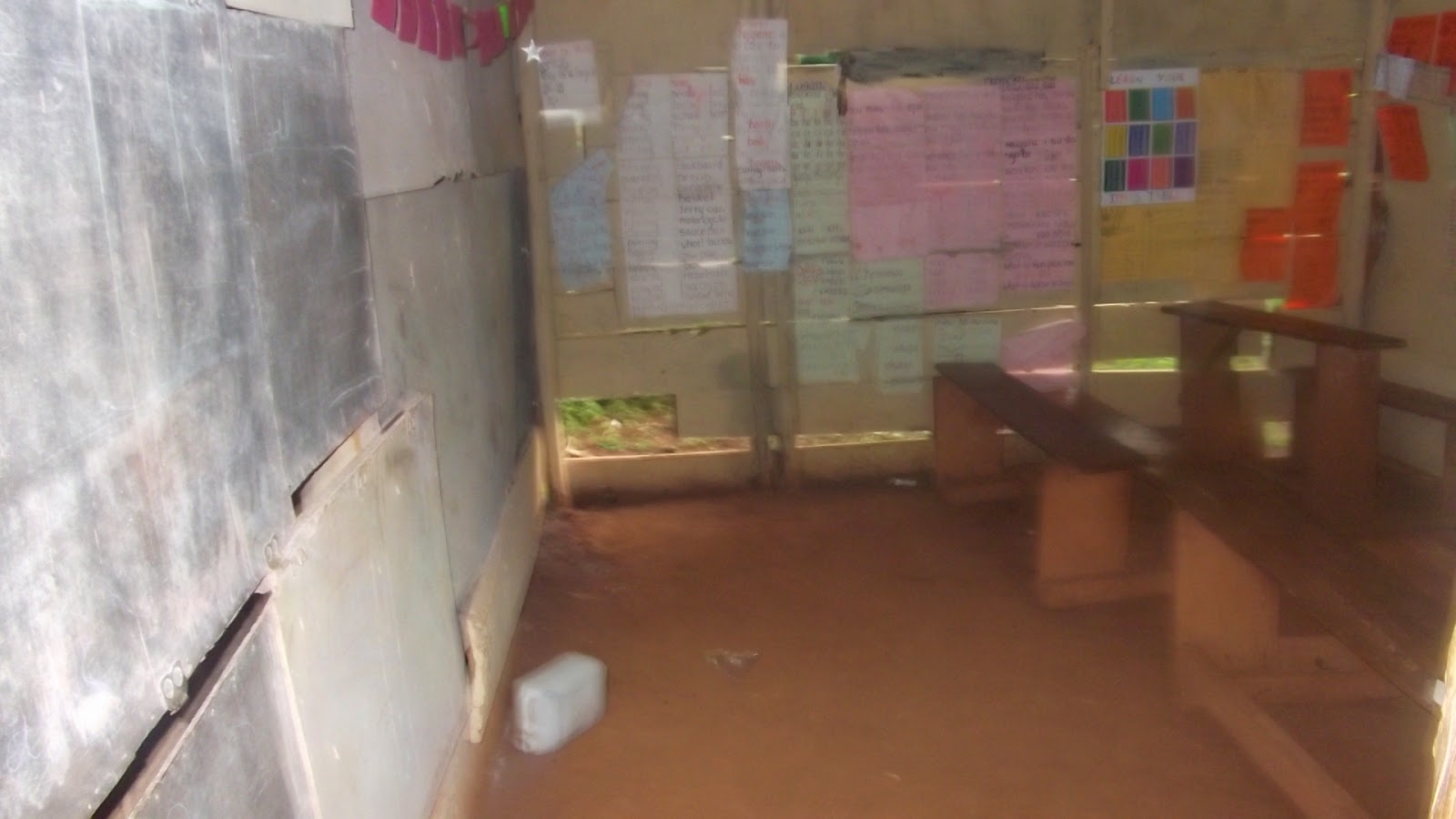
Whilst in Uganda, I had the joy of teaching in some local primary schools, one, pictured below, called Ruth Mothercare. Ruth Mothercare was set up as a school for children who couldn't really afford school, and consequently the fees are a lot lower. Furthermore, as I mentioned, often children get turned away for not paying fees, but after two weeks they are allowed to come back to Ruth Mothercare, and often there are children who haven't paid fees because their families just can't afford it, or have paid for previous years. This school was one of the most wonderful places I have been to, it was a joy to work with their two teachers, Teacher Ruth and Teacher Monica. I don't normally ask for money on this blog, and won't make a habit of it, but I can't stress how amazing Ruth Mothercare as a school is, and what an impact it is having on an incredibly poor community, so if you feel you want to donate, please talk to me. As you can tell I am very passionate about this so do speak to me if you want to know a bit more about this issue. 


Ruth Mothercare School, top and bottom is P1 and P2 classroom (one room) and the picture in the middle is the whole school. 

A final thought: this is a post about empowering girls. If you agreed with what I said (or at least some of it) you're probably a feminist, just something to chew on! 


Monday, 1 September 2014

Inspiration is better than judgement.

‘It’s a show about cakes!’ This was a tweet from Sue Perkins regarding the drama that exploded after the ice-cream/bin incident which occurred in the most recent episode of ‘The Great British Bake Off.’ Now don’t get me wrong, I want #justiceforIan as much as the next person, I am an activist after all. But really, is there a necessity to get so het up about what is comparatively a small issue. When one in eight people go to bed without food every night, and in South Sudan currently one million children are suffering from acute malnutrition; and we seem to be more concerned with an Irish guy having a strop. Something has gone wrong. Our priorities have gotten mixed up.


It seems that we care more about mundane issues on our doorstep than the haunting reality of what is going on in the world right now. Recently people down the road where I live have been getting very stressed because someone has cut their hedge without warning the rest of the street. Seriously. I wish I was making this stuff up. And this is a mindset, a belief we have created that our own comfort, our own way of life is the most important thing. When someone threatens that we will quite happily speak out, but when we hear stories of women sold into slavery in Iraq having been driven from their homes, where is the uproar? Where is the passion? Where is the desire for change?

I’m not saying that we are all totally apathetic, and obviously there are campaigns that are working tirelessly to help those affected in Iraq and South Sudan and other parts of the world. But what I am worried about is that our priority has become more about our own comfort, and the mundane things such as cakes than the harsh reality of this world.

I recently attended a Christian festival, and although I had a great time learning from God’s word, seeing old friends and worshipping my creator, I couldn’t help but feel a sense of sadness. It seemed that even in this Christian event, we have fallen into the trap that the world has created, a trap of individualism, consumerism, with personal comfort at the centre. To use an example, a lot of the worship seemed to be very self-indulgent. How many times does a worship song need to have the words me, or I in it? You are always with me, you never let me go, you love me, all for my good. Yes. These are amazing gospel truths which we need to embrace and to cling on to. But I think we need to remember in our worship to sing this over our brothers and sisters suffering in this world. Even if we changed the words to your love never runs out on us. What a difference would that make to the way we worship, remembering that our worship is not simply about what God has done for us, it is about embracing and praising him for the hope he brings to humanity as a whole.

So what do you do? Well this article is more of a statement of a mission I am on. Talking about this very issue, Danielle Strickland, Salvation Army Officer and activist said, ‘inspiration is so much more powerful than judgement.’ And that really challenged me. Rather than judge my friends, the people living down my street, the worship leaders for what I might perceive as an individualistic outlook, I have to model something different. I don’t know what is going on in people’s hearts, and me judging people for a possible lack of concern for the poor is just as hypocritical. I am guilty of the same sin I am judging them for! So my mission is to live differently. Mother Teresa, one of my heroes, didn’t shout at her contemporaries for their disdain shown towards lepers, she modelled a different way. She demonstrated an unconditional love. And I have to do the same. To live out the importance of justice, of outward looking worship, of concern for the orphan and the widow. So this article is a declaration that I am going to try, and an invitation for you to hold me accountable. To remind me when I am judging and not inspiring, when I am observing as a cynic and not loving unconditionally. And how am I going to do this? Through small actions, through rhythms essentially, which become habits. So when I worship, when I sing ‘you never let go’ sing it over the Iraqi Christians, and pray they know that truth. To buy ethically and so not to be guilty, like Israel, of exploiting others on the day of fasting. (See Isaiah 58). To ‘speak up for those who cannot speak for themselves’, (Proverbs 31) not just when it comes to questionable ice-cream sabotage. Ultimately, to act justly, love mercy and walk humbly with my God.

If you too want to inspire instead of judge, and feel this world aching for something more, please join me on this beautiful messy adventure. Join me as we seek to pray for the hurting, care for the sick, give to the orphan and widow, and display a connection with a world beyond our back garden.

The best model I can give for this is the gospel of Jesus. Quite possibly the second best is Tearfund’s ‘Rhythms’ page, helping you take small actions which create Rhythms which can change the world.

http://rhythms.org/

Check it out, sign up and let’s do this together.

‘A life not lived for others is not a life.’ Mother Teresa.

Thursday, 21 August 2014

'Hashtag' Activists

The ‘hashtag’, love it, hate it, still not quite sure how to use it, it has become an internet sensation. Every status update, photo, comment is followed by a ‘hashtag’ of some sort. I even find myself using it when I am talking to someone! It’s a little bit ridiculous really. 

Some hashtags are great, they get a campaign trending, keep up awareness in social media of certain issues and unite people passionate about justice. For instance, the #bringbackourgirls hashtag for the girls kidnapped by the Boko Haram was incredibly popular. So is the #WeAreN, as a way of standing in solidarity with the Christians persecuted in Iraq. Or #SudanNow is another one, raising awareness for the plight of the community of South Sudan at present, as that country is torn apart by war. And as I say, these are great at maintaining momentum and attention for issues in the world of social media.

But the #bringbackourgirls hashtag still hasn’t seen the release of the 200 Nigerian school girls kidnapped by the Boko Haram. Remember them? And Jesus didn’t change the world through a hashtag. He did it hanging on a tree. Obviously Twitter wasn’t exactly around much in 1st century AD, however, I think even if Jesus was on earth now, and had a Twiter and Facebook account, he wouldn’t just be hashtagging. Note an important word there. Just. There’s nothing wrong with social media campaigns, but seriously, how lazy have we become?! We write a 140 character tweet with a nice catchy or witty hashtag at the end. And then what? Have we become so comfortable that we have designed for ourselves a nice way to fight injustice from the comfort of our own homes? Jesus didn’t say carry your couch and follow me, he said carry your cross. A cross. The most horrendous form of execution the Romans could imagine. Where you slowly suffocate to death. Now we know Jesus died once for all on the cross, but what he is implying here is if you want to follow him, it’s going to be messy. It’s going to be painful. It could result in death. The problem with the hashtag campaigns is that our idea of a cross gains two more lines and becomes a lot easier to ‘follow,’ (in both the Biblical and the Twitter sense). I’m not saying we shouldn’t engage in our culture, we should, we just shouldn’t stop there.

I’m also not saying we should all pack our bags and head to Iraq, or Syria, or South Sudan, although if you can do that, do it! Go in Jesus name, perhaps that’s the cross he’s called you to carry. But I know not everyone can, so I’m saying do a bit more than join a ‘trending’ hashtag. We’re called to be in the world, but not of it. Let’s not follow the ‘trend.’ Let’s set a new one. One where campaigning for justice means getting your hands dirty. It means digging deep into your pockets. It means giving until it hurts, not just your money, but your time, your energy, your generosity.

I want to offer two practical ways in which you can do more than a hashtag to help change the world, particularly in Iraq, Gaza and South Sudan at the moment.
1
  •               Donate. Open Doors, Christian Aid, UNICEF, International Rescue Mission, Tearfund are just a few of the numerous amazing organisations working in these broken countries. Give more than 140 characters, give so that you feel it. Even if it means missing a Starbucks for one morning.


  •      Pray, pray, pray, pray, pray. ‘If you ask for anything in my name, it will be given.’ (John 15:16, NIV). That’s a promise from Jesus. How many of us have spent hours, days, praying, and fasting for peace at the moment? When Jesus was praying in Gethsemane before his death, he was hurt that his disciples couldn’t stay awake for even one hour. (See Mark 14). I wonder if our friends in Iraq are thinking the same thing. Couldn’t you stay awake for one hour? Let me challenge you to try.


So as you’ve read this article, sorry it was a bit longer than a tweet, I encourage you to think about how you can act. How can you pick up your cross, not your phone, and follow Jesus? Even when it hurts. Indeed, two verses after the promise of answered prayer is this promise: ‘If the world hates you, keep in mind that it hated me first.’ John 15:18, NIV). Following Jesus, not just on Twitter, but in real life, it’s painful. But could we try? I end with this: When Jesus returned and found his disciples sleeping a third time ‘they did not know what to say to him.’ (Mark 14:40, NIV). Let’s not be the same when we meet our LORD and our brothers and sisters who face horrors right now. Let’s not be  hashtag activists, let’s be real ones. 

Sunday, 17 August 2014

We Are N

WeareN. This is the popular hashtag accompanying pictures of the letter ‘nun’, the first letter of the word Nazarene in Arabic, Nazarene meaning Christian. Many people have put this on their Facebook and Twitter profiles to stand in solidarity with those suffering horrendous things in Iraq. We are N. We are Christians. We follow Jesus. According to our Facebook profile picture at least.

But what when we’ve changed the photo, or when we leave the church building after ‘a really helpful talk’, do we just leave it there?

I’ve just returned from ten months in Uganda. I’m overwhelmed, I’m shocked and to be frank, I’m scared. I’m scared at how much difference an eight hour flight can make to what the world around me looks like. But even more than that, I’m scared at the distance we in the west seem to have put between us and the rest of the world, not eight hours, but a world away. We go to church and we sing songs of how great Jesus is and when all around is fading he is our strength. And it’s true, he is wonderful, I’m a big fan. But how often do we simply sing these songs and listen to these talks with tunnel vision. Applying it to my life, to me, myself and I? When all in our lives in fading. What about people who are dying every single day from preventable diseases? What about children who are being beheaded in Iraq? What about the despair that is so evident in Gaza right now? Can we really sing that with those in mind, because we know we will act on behalf of them? Have we limited the gospel of Jesus so much to ourselves that we go to church hoping for some sort of personal transaction? Like a spiritual ‘ATM.’ LORD, I’ll give you an a hour and a half and if you could top me up spiritually, give me a bit of peace, help me through this week and let me hear a talk that reminds me that you love me that would be dandy, and then we’ll both be on our way, thanks very much, see you next week.

The gospel of Jesus is so, so much more than that. It’s life changing. It’s transformative. It messes you up. Because your concern, your heart, your desire for Jesus’ help isn’t just personal anymore. It’s about others. You feel other’s pain. You hurt for those who hurt, you mourn with those who mourn. I have been absolutely broken about the situation in Iraq. Because my faith is no longer just about ‘self-help.’ It’s about Jesus. It’s about his children, those who are hurting, broken, scared, abused, tortured, being killed. So rather than go to church, or change my profile picture, and leave it there, and get on with my life, I want to do everything in my power to eradicate injustice. You may read that sentence and think I don’t have much power. I’m an unemployed graduate. So yes, in earthly terms in don’t have much power. But thankfully my identity is not based on earthly terms, it’s in heaven’s currency, and according to God, ‘all authority in heaven and earth has been given to me.’ I have power, because I trust in Jesus, and it’s his power, manifesting itself in me. The Bible describes Jesus as a roaring lion, friends, let’s set that lion free in the name of justice! Let’s go out in power and in might, proclaiming the word of the LORD! Not because we ought to, not for some sort of quota, but because when you follow Jesus your personal satisfaction is not enough anymore. Things going well in your own bubble is not satisfying. Because you see this broken world and you mourn. And as Jesus reminds us, ‘the poor will always be with you.’ So we always need to be out, loving people, serving people, getting down on our knees for people, buying a cup of coffee for someone going through a tough time. Jesus loves us so much he died for us, and he calls us to love like that.


Jesus messes you up. He changes everything. Life ceases to be about your own personal comfort and becomes a relentless pursuit of justice, freedom, love and peace. So let us show the world that we are N. Not just by our Facebook and Twitter profiles, but by the love of Jesus, set in us, so that we can’t help but love people, serve people, and see this world transformed.