Showing posts with label volunteering. Show all posts

Wednesday, 3 September 2014

Back to School: The Privilege of Education

September, shoes are cleaned, new bags are bought, pencils are sharpened, alarms are set, it's that time of year again. Growing up the phrase 'back to school' felt like a dark cloud looming over my summer holidays. I would be happily playing away and then someone would mutter that awful question, 'when do you go back to school?' Now don't get me wrong, I did enjoy school, secondary school in particular, but during the long freedom of summer, endless picnics and days on the beach, getting up early to go and get yet more homework and spelling tests felt like the last thing I wanted to do!

But in the UK we are so unbelievably lucky that education, at least through school, is not just available, but is a requirement to all children. In most countries in the world, education is a privilege, something to be treasured, something to fight for. 

In Uganda, as is the case in most of the developing world, people have to pay fees to go to school. There are a handful of government schools in Uganda, but they are few and far between, most people have to pay to send their children to school, aside from the cost of uniform, books and pencils. Furthermore, in most Ugandan schools, the rule is if parents haven't paid the fees, children are sent home until the family can find the money, at which point they start where the left off, leaving teenagers in primary school. Remember that these families are often desperately poor, even living on just £1 a day. Now when you think about having to pay school fees for multiple children, find food, pay for healthcare (there's no such thing as the NHS in Uganda either, but that's another post) educating children can be a challenge, and there are many children in Uganda or don't get the opportunity to go to school. It was Nelson Mandela who said that 'education is the most powerful weapon you can use to change the world.' And he is so right! If you educate a child, it provides them with resources to get a job, have an income, believe in their worth, a clear route out of poverty.


Some girls and boys in Uganda enjoying an education at Ruth Mothercare school (see below)

However, often money is not the only barrier which stops children having an education. In many cultures, girls are considered inferior, and are not offered the same educational opportunities as boys. Malala, the girl who stood up to the Taliban because she, as a girl, wanted to go to school, and got shot in the head for it, is a worldwide sensation. World leaders call upon this teenager! But she saw the importance of education, and wasn't willing to let cultural restrictions stop her. What an inspiration! 


A debate in a Ugandan classroom left Teacher Anna very unhappy!

But currently there are 65 million girls currently not in school (PLAN International). Just take that in. 65 million. That's more than the entire population of the United Kingdom! Educating girls is not simply about empowerment of that individual, however. Educating a girl can change an entire village, town, city or even country. 

This short video shows the amazing impact that educating a girl can have: 
http://www.girleffect.org/why-girls/#&panel1-1 Therefore not only does educating a girl help keep her out of poverty, it keeps her safe from the risk of human trafficking, dying in childbirth and HIV. 

An amazing book which argues for women's empowerment, 'Half the Sky, How to Change the World' makes this point: It's no accident that the countries that have enjoyed an economic take off have been those that educated girls and then gave them the autonomy to move to the cities to find work”. The book backs up this claim with stories of transformation from communities who have invested in women. Ultimately, if you want to change the world, educate a girl. 

If you want to find out a bit more about this issue, the UN has loads of information of girls education and female empowerment generally. There's a reason why educating girls is part of the Millennium Development Goals.

I also highly recommend: 'Half the Sky: How to Change the World.' Nicholas D. Kristoff and Sheryl WuDunn.  and:  'I Am Malala.' Malala Yousafzai. 

If you want to do more, child sponsorship is an incredible way which helps get children into schools by helping pay their fees. I highly recommend Smile International, the organisation I worked with whilst in Uganda. 


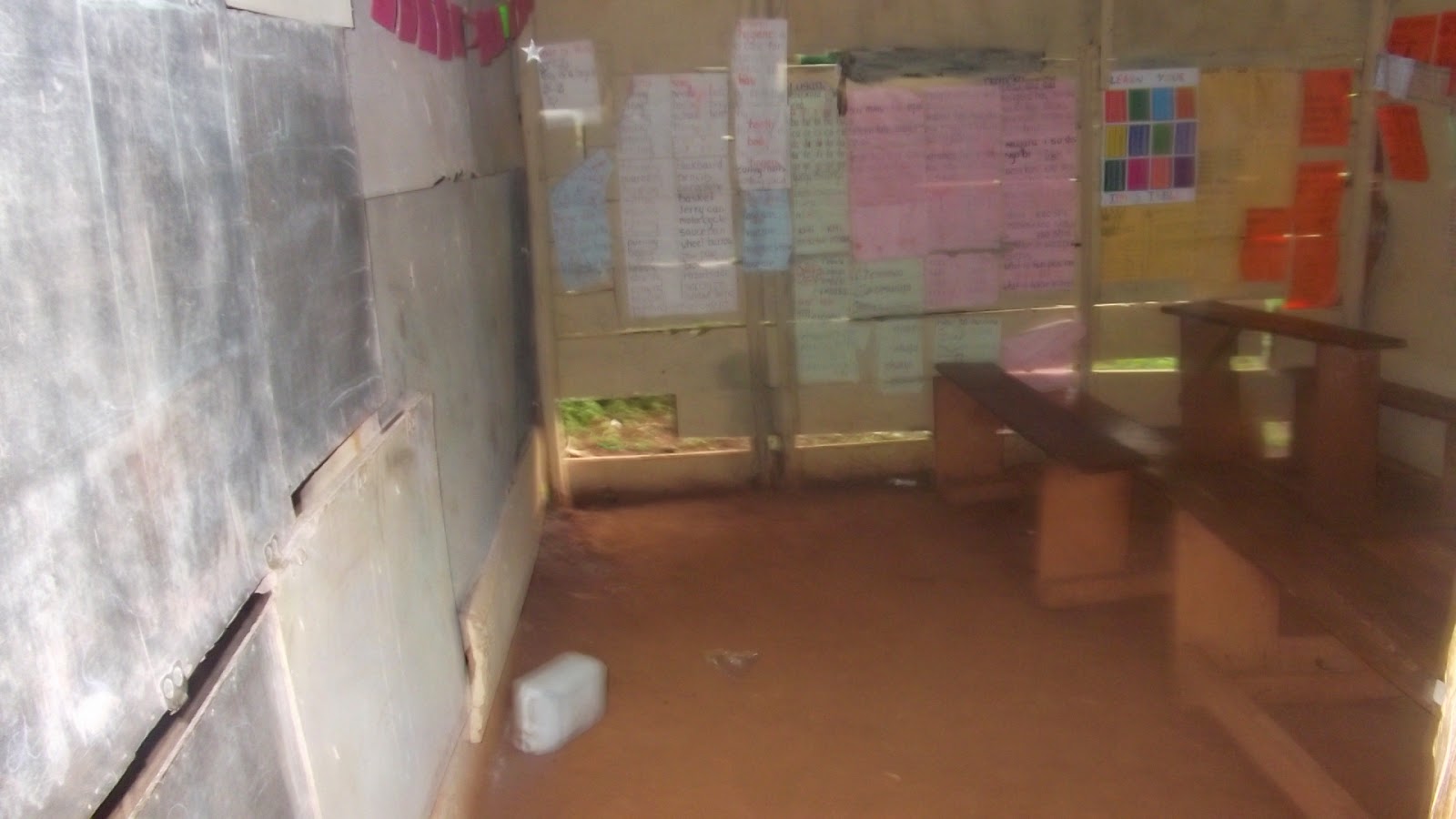
Whilst in Uganda, I had the joy of teaching in some local primary schools, one, pictured below, called Ruth Mothercare. Ruth Mothercare was set up as a school for children who couldn't really afford school, and consequently the fees are a lot lower. Furthermore, as I mentioned, often children get turned away for not paying fees, but after two weeks they are allowed to come back to Ruth Mothercare, and often there are children who haven't paid fees because their families just can't afford it, or have paid for previous years. This school was one of the most wonderful places I have been to, it was a joy to work with their two teachers, Teacher Ruth and Teacher Monica. I don't normally ask for money on this blog, and won't make a habit of it, but I can't stress how amazing Ruth Mothercare as a school is, and what an impact it is having on an incredibly poor community, so if you feel you want to donate, please talk to me. As you can tell I am very passionate about this so do speak to me if you want to know a bit more about this issue. 


Ruth Mothercare School, top and bottom is P1 and P2 classroom (one room) and the picture in the middle is the whole school. 

A final thought: this is a post about empowering girls. If you agreed with what I said (or at least some of it) you're probably a feminist, just something to chew on! 


Saturday, 22 February 2014

From 'The Little White Girl'

From ‘The Little White Girl.’

I recently read an article entitled ‘The Problem With Little White Girls (and Boys).’ The writer was questioning the effectiveness of western teams heading out to the developing world to work with and help local communities.

I currently live in Uganda, volunteering with a charity. I am ‘a little white girl.’ The article was saying that sending teams out can actually be detrimental to development efforts. I completely agree! The notion of wealthy young people going out to the developing world to ‘save it’ is, to be honest, a lie. The author of the article refers to an experience she had building a library, where the local community had to ‘undo’ the work their team had done. And that highlights a hugely important point about overseas volunteering. It’s not us coming to do it for them. It’s us doing it with them. Learning when we’re doing wrong, and sharing skills, resources and experiences. We are a global community, a family. And we have to do this together. Working alongside sustainable projects based in-country for the long haul.

This point is concluded with the phrase ‘we failed at the sole purpose of our trip.’ For me, the sole purpose of my trip here isn’t to leave a physical legacy, have been a fantastic teacher or have built something. That’s great, but it’s deeper than that; it’s to be changed. To see poverty with fresh eyes. To have made poverty personal. To be transformed and broken on a level so much for the poor that I will never be the same again…and so I will consequently commit my life to passionately pursuing justice, whatever it takes. And I would argue that anyone going on a trip to the developing world will have that. And if that doesn't happen, that is failure.

So what about the success of the work I’m doing out here? Well I never intended on coming to Uganda and becoming a child’s hero. As the article says, I want her hero to be someone of her culture, her race, someone who can continue to help and inspire her when my flight leaves. But perhaps by my coming out here and running a children’s club for two hours so the mother has a break, when the child goes home again she can relate to her rested, restored mother, who then can be her hero. I’m no one’s hero, but perhaps by the small actions I can do, I can enable someone else to become a hero.

I never came out to reform the education system. Who am to presume I could do that?! I have no qualifications, no training and I cannot pretend I have a strong desire to be a teacher. But I go into a school twice and week to work with local teachers and teach children English, Maths, RE and other subjects. I am not a builder and yet I have helped build a church, and on a separate occasion, a water-tank for a local community.

But I know I am doing the right thing. Why? Because our English team and the Ugandan team are working in tandem. We do things together, we share experiences, challenges, ideas and struggles. And yes, I struggle with my lack of qualifications! But I have to remember something, I was blessed with a good education, enthusiastic teachers and a great school life. So I can bring experience from my own childhood when teaching these kids. I went to church and grew up going to children’s clubs. So although I’m not children’s worker, I have memories of great holiday clubs. I was blessed so I can bless others. I am no builder, but I can carry bricks and lay them. I just need to be humble enough to listen, to remember that I am not here to solve every problem. I’m here to help and we’re here working together.

I’m a Christian. I believe in a God who uses the nobodies, the unqualified, those who, on the outside, look like they can’t do anything. And he uses us to change the world. He did it with 12 men, tax collectors and fishermen. Jesus doesn't call the qualified, he qualifies the called. If we all waited until we were totally qualified for a task nothing would ever get done!

The important thing is to work with an organisation that are in the field, in-country for the long haul. The author of the article to which I refer uses some brilliant examples of work in the Dominican Republic, and of employing local people to run projects out there. And that is exactly what is needed. Using local volunteers with a much better knowledge of the culture and language. However, I can still be here helping, bringing what I do know, what I have learnt, and ultimately, being challenged by what I see.

I would encourage you if you’re thinking about volunteering to question your attitude. Why do you want to do this? You are not the answer to all the problems faced by developing countries, I hate to break it to you! But you can go serve, alongside the community. And as you do, you will be changed in ways you can’t even imagine. You will be refined. You will be challenged. You will be equipped to begin to change the world.


So in the words of Mother Teresa: ‘Give the world the best you have, and it may never be enough; give the world the best you've got anyway.’